Rising damp & damp courses
Survey first, then a new chemical damp proof course injected into the mortar bed, waterproof render and re-plaster. Guaranteed in writing.
How it is done The Damp Company
UK Ltd · Est. 2011
Call the office
020 8251 9702
Rising damp, penetrating damp, condensation and mould across Croydon and South London. A father-and-son firm working under its own name since 2011 — so the person who prices the job is the person who does it.
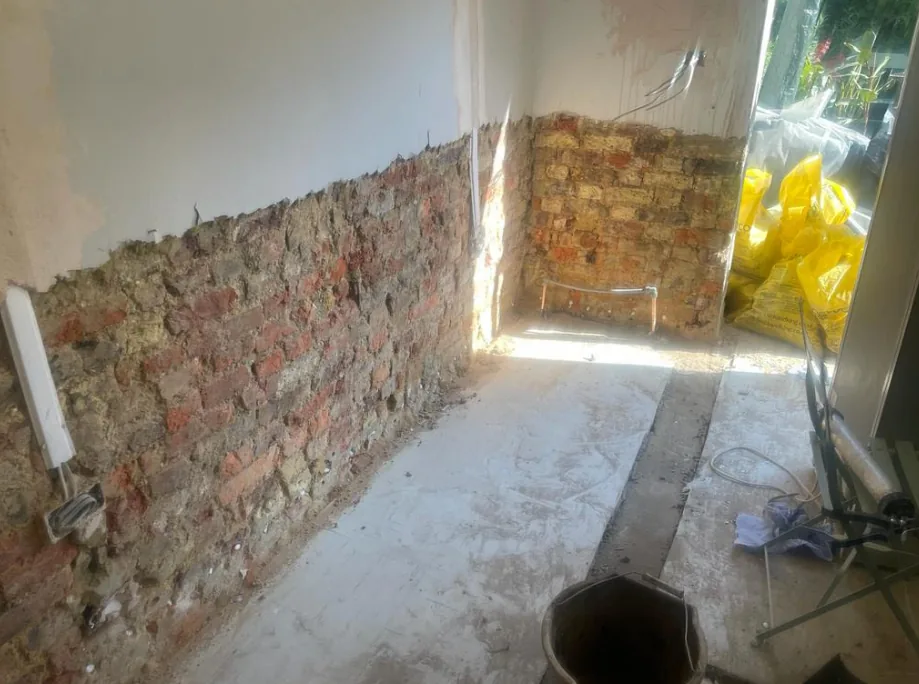
What we do
Nearly every damp job ends in plastering. We do both halves, so there is no second trade to book and nobody to blame if the finish is wrong.
Survey first, then a new chemical damp proof course injected into the mortar bed, waterproof render and re-plaster. Guaranteed in writing.
How it is doneOne patch that gets worse after rain. Usually a failed gutter, a cracked render or bridged brickwork outside — fixed outside first.
What we look forBlack spotty mould in corners and around windows. Treated, then ventilated — because replastering a condensation wall solves nothing.
Read this firstAirbricks cut into the outside wall, extract fans and positive input units. The cheapest fix on this list, and often the right one.
Where it helpsTwo coats of sand and cement with a waterproofer, inside after a damp course or outside on a wall taking the weather.
RenderingSkimming, dry lining, screeding, and treatment or replacement of skirtings, joists and floorboards that the damp has taken.
Plastering workBefore you call anyone
They are told apart by where the damp sits, what it does when you wipe it, and whether it changes with the weather. Open the one that sounds like yours — including the one where the answer is that you do not need us at all.
Condensation. Moisture already in the air settling on the coldest surface in the room. It is the most common of the three and the one most often sold to people as rising damp.
What we would do: treat the mould, then fix the ventilation — an airbrick, an extract fan, or a positive input unit in the loft. Replastering a condensation wall is money spent for nothing. It comes back through the new plaster inside a winter.
Penetrating damp. Water getting in from outside at one point — a blocked gutter, a cracked render, perished pointing, a leaking downpipe, or a flowerbed or path bridging the damp course.
What we would do: find and fix the outside cause first, let the wall dry, then make good inside. Plastering over it before the outside is sorted just hides it until the next downpour.
Rising damp. Groundwater drawn up through the brickwork because the damp proof course has failed or was never there. This is the one that needs a new course — and it is the rarest of the three.
What we would do: survey it, then take the plaster back to brick, inject a new course, render in two waterproof coats and re-plaster. That is the job set out step by step below.
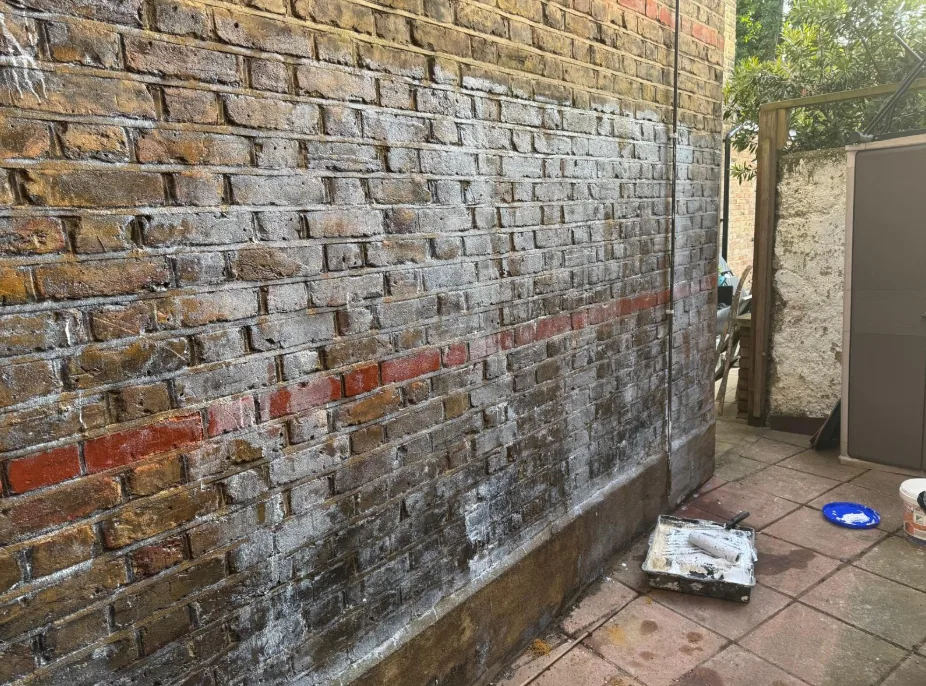
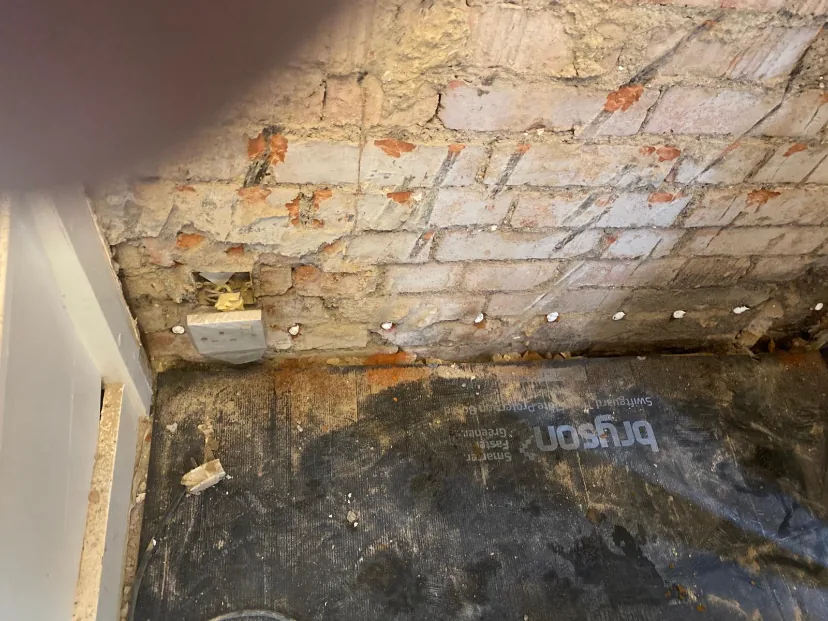
The job itself
This is the specification we wrote out for a lower-ground flat in South London, word for word. It is the same sequence on nearly every rising damp job, and it is what the estimate will say.
Skirtings, radiators and electrical sockets come off the affected walls. Floors and furniture go under sheeting before anything is touched.
Plaster and render come off to roughly a metre high — above the tide line — so the wall can be seen and the salts come away with the old plaster.
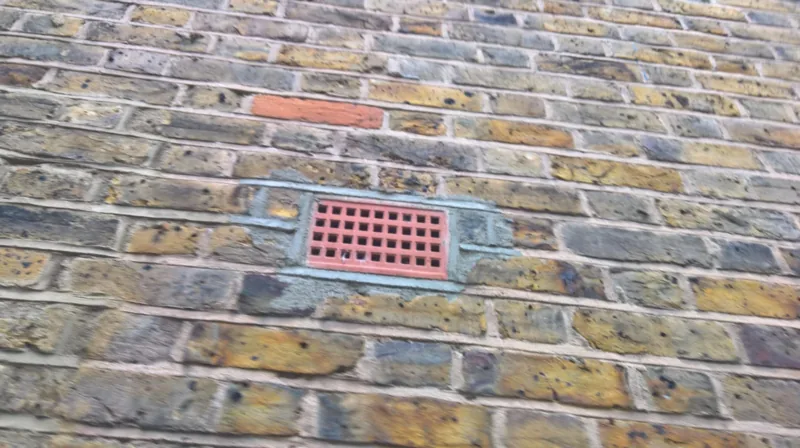
Where the wall needs it, airbricks are cut in to add natural ventilation. Often the difference between a wall that stays dry and one that does not.
Holes drilled into the mortar bed at the right height and spacing, cream injected, holes plugged. This is the part the guarantee covers.
Sand and cement with a waterproofer, applied in two coats, to stop any remaining salts and moisture coming through to the new finish.
No skimming over damp render. The wall is left to dry before the finish coat goes anywhere near it — rushing this is what makes a job fail.
Skimmed to a smooth finish all the way up, not just to the patch, so the wall is one flat surface ready for decorating. Skirtings back on, site cleared.
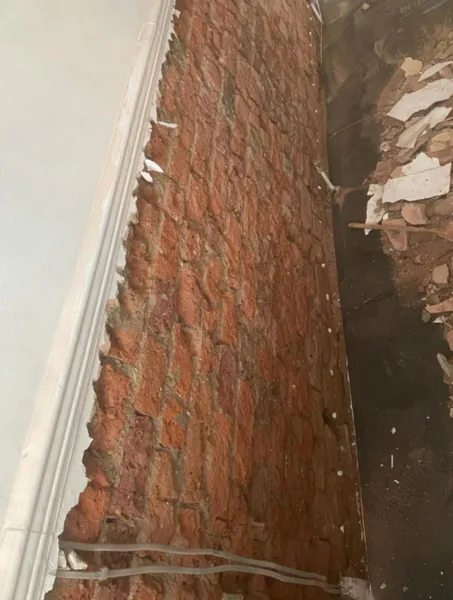
Our own jobs
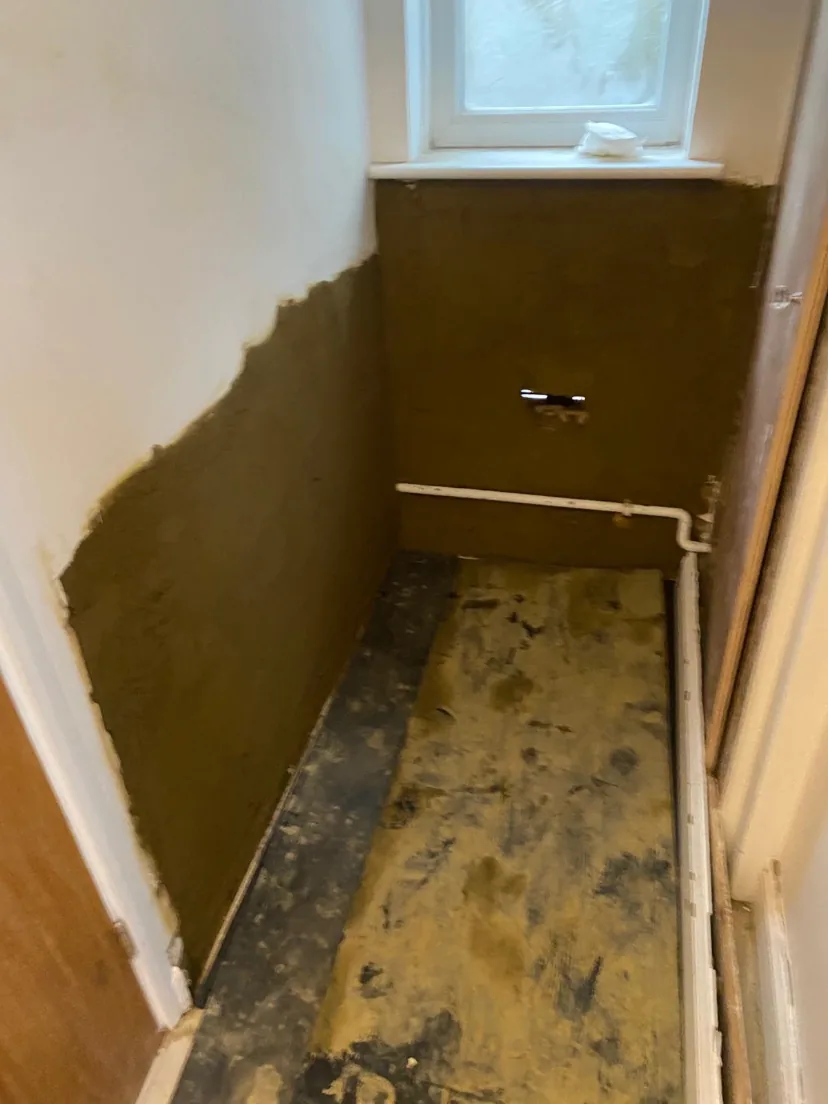
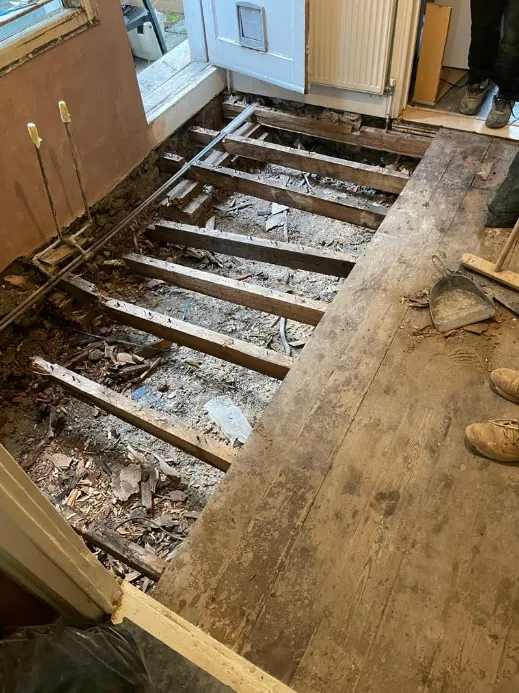
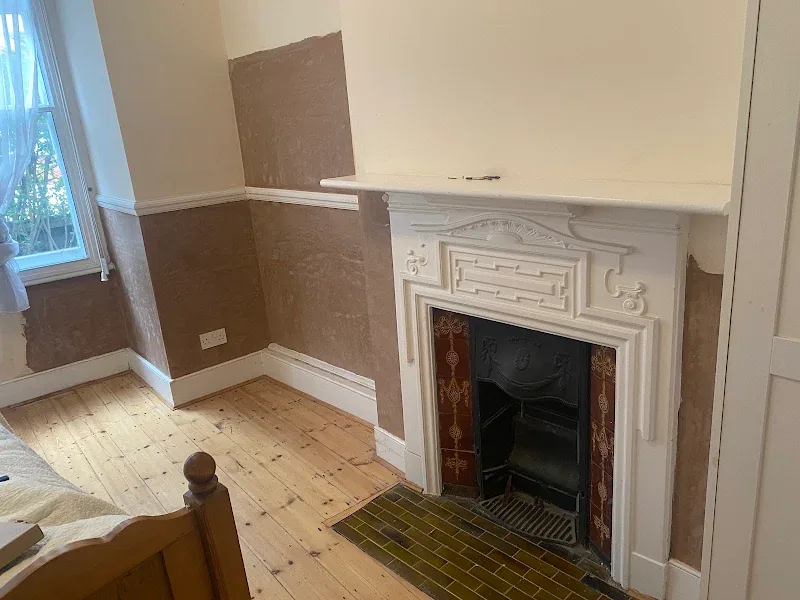
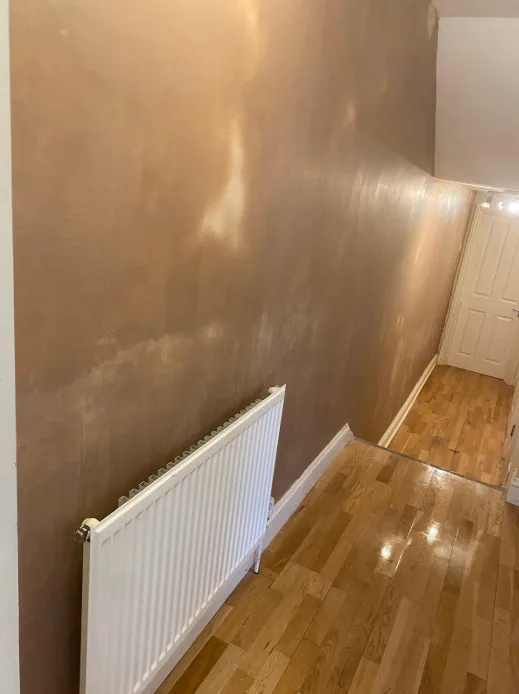
Every picture on this site is a job we did, taken on the day. You can see the same ones on our Checkatrade and Which? profiles.
What customers say
Quoted from Checkatrade and Which? Trusted Traders, with the postcode and month the work was done. Nothing here was written for this website.
“Charlie and his son are both extremely professional, friendly and punctual. They carried out the damp treatment work and repaired the damaged walls, bathroom walls and ceilings caused by a leak. The quality of their work was excellent… they made sure the place was left spotless and tidy afterwards.”
“Charlie was highly knowledgeable and professional when he called and immediately identified the problem and the solution. He worked very carefully and cleanly to install a new damp proof course in my lounge to resolve a worrying issue for me and put my mind at ease.”
“We had an issue with mould and condensation in our home… They responded very quickly, explained everything clearly, and installed the ventilation system without any hassle. The mould treatment was carried out thoroughly, and they were extremely tidy and respectful of our home while they worked.”
Which? Trusted Traders scores us 5.0 for customer service, 5.0 for quality and 4.7 for value, and 100% of reviewers recommend us. Checkatrade member since July 2013.
Where we work
Based in Thornton Heath. These are the areas we are in most weeks — and on the areas page, the actual postcodes we have worked in, with the month and the review.
Free estimate
Most damp is diagnosed from a photograph of the wall and the skirting before anyone comes out. If it turns out to be condensation and you need ventilation rather than a damp course, we will tell you that.
Call the office
020 8251 9702